

Monthly RUNdown time. Speaking of run-downs, some personal news: I’m running the Boston Marathon on Monday. I got the call up from the waitlist and into the pro field just two weeks ago. With a baby on the way and who knows how much time I’ll have to run once 2 babies are in the mix, I had to say yes.
Here’s what’s going on in the mortgage world:
Mortgage rates spiked to 2026 highs at the end of March
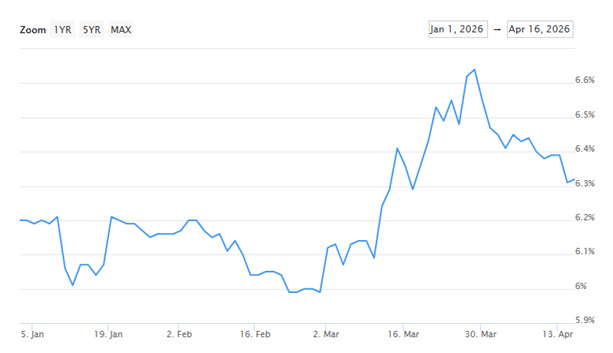
Between March 12–27, mortgage rates surged above 6.6%, the highest level since August 2025. The move was driven by inflation fears picking up, largely tied to higher oil prices and tension in the Middle East. This was one of the fastest upward moves we’ve seen in months and caught a lot of buyers off guard heading into spring. I was writing some “conservative” preapprovals at 6.25% or 6.375%... thankfully we’re back near that level now. Those waiting to refinance we’re quickly put on pause and will likely need to wait until the summer to see anything sub-6% again.
The Iran conflict became the dominant driver of rates
From mid-March into April, mortgage rates were heavily influenced by the war with Iran. The war has pushed energy prices higher which has fed inflation and market volatility. As a result, mortgage pricing became much more reactive to headlines than typical economic data, creating a less predictable rate environment than we’re used to.
Rates began improving again
As bond markets stabilized and investors began pricing in slower economic growth, rates started to improve. Over the past couple of weeks, we’ve seen a steady decline back into the low 6% range (~6.3%). This has been a very helpful relief for many buyers.
Inflation: March came in hotter than expected
We got the March CPI report on April 10 and it showed a reacceleration in inflation. Inflation jumped to 3.3% year-over-year, with a massive 0.9% month-over-month increase. The main driver was energy, with gas prices spiking over 20% during the month. Core inflation (which strips out food and energy) was more stable at 2.6%, which helped keep rates from jumping much.
Higher rates + fear are already slowing the housing market
The impact of this rate spike showed up quickly in housing data. National home sales dropped to a 9-month low in March, with affordability and buyer confidence metrics taking a hit.
What we’re seeing here in Denver
We’re still seeing seller concessions and rate buydowns which tells me buyers have some leverage and negotiation power. At the same time, I’m seeing plenty of multiple offer scenarios. These counteracting results show that we’re in a balanced market locally right now. The most interesting split I’m seeing is single-family homes vs. condos. Detached homes are still competitive, but condos and townhomes are sitting longer and causing more frustrated sellers, largely due to higher HOA & insurance costs. Surprisingly, rents are actually down pretty meaningfully year-over-year in Denver, thanks to a continued wave of new apartment supply. For many potential buyers, continuing to rent is starting to make more mathematical sense.